
The power and polarity of ‘same love’

Updated: Jul 23
If you take a snapshot of social media in June, #Pride is one of the most trending topics. At first glance, you might expect the conversation to be about what Macklemore calls "Same Love", celebrating love, inclusion and equality. Instead, what emerges is an increasingly polarized debate not only visible online.

Jimmy Westerheim
Founder of The Human Aspect
Camilla Koveland
Copywriter
This article contains quotes from the short film “Queer identity" that you find integrated in the bottom of this article. |
What is it about Pride that sparks such intense engagement?

The Norwegian Police Security Service has reported a clear rise in hate speech, threats and abusive behaviour, both online and offline every June. During Pride week this year, Norway also marked the fourth anniversary of the London Pub terror attack. A painful reminder of where polarization ultimately can lead, when hatred towards a specific group, like queer people grows unchecked. Experiencing these developments in a country often considered one of the safest places for queer people makes you wonder: what are the underlying dynamics?
What we see in today's polarized online debate around #Pride is that few people fully identify with either narrative. Where the narrative of one extreme is that the majority heteronormative perspective should be the ruling foundation of society, and the other side portrays the need for a societal transformation, where minority needs form the basis of a new society. Both narratives are effectively shaped by them centering their own perspectives as a “truth” and with it automatically excluding any perspective challenging that. Therefore, many limit their participation in this intensifying climate to a like, a hashtag or a generic profile frame, or remain silent altogether. Withdrawing rather than engaging in the deeper conversations that meaningful change requires. A natural instinct towards what can feel like the safest option, in fear of the backlash that can come with speaking up, while others convince themselves that it is not their fight. The problem with staying silent is that the loudest voices end up shaping the conversation.
History has shown that when polarization goes unchallenged, progress that once seemed secure can slowly begin to unravel. Which is what many queer people are experiencing right now across the globe.
It is easy to lose sight of history. Most of us understand the world through our own experiences, stories passed down by parents and grandparents, combined with the narratives we encounter in school, media and popular culture. As a result, it is easy to assume that today's debates around gender identity and queer rights are something new or at the “evolved” end of the scale. A closer look at history tells a different story.
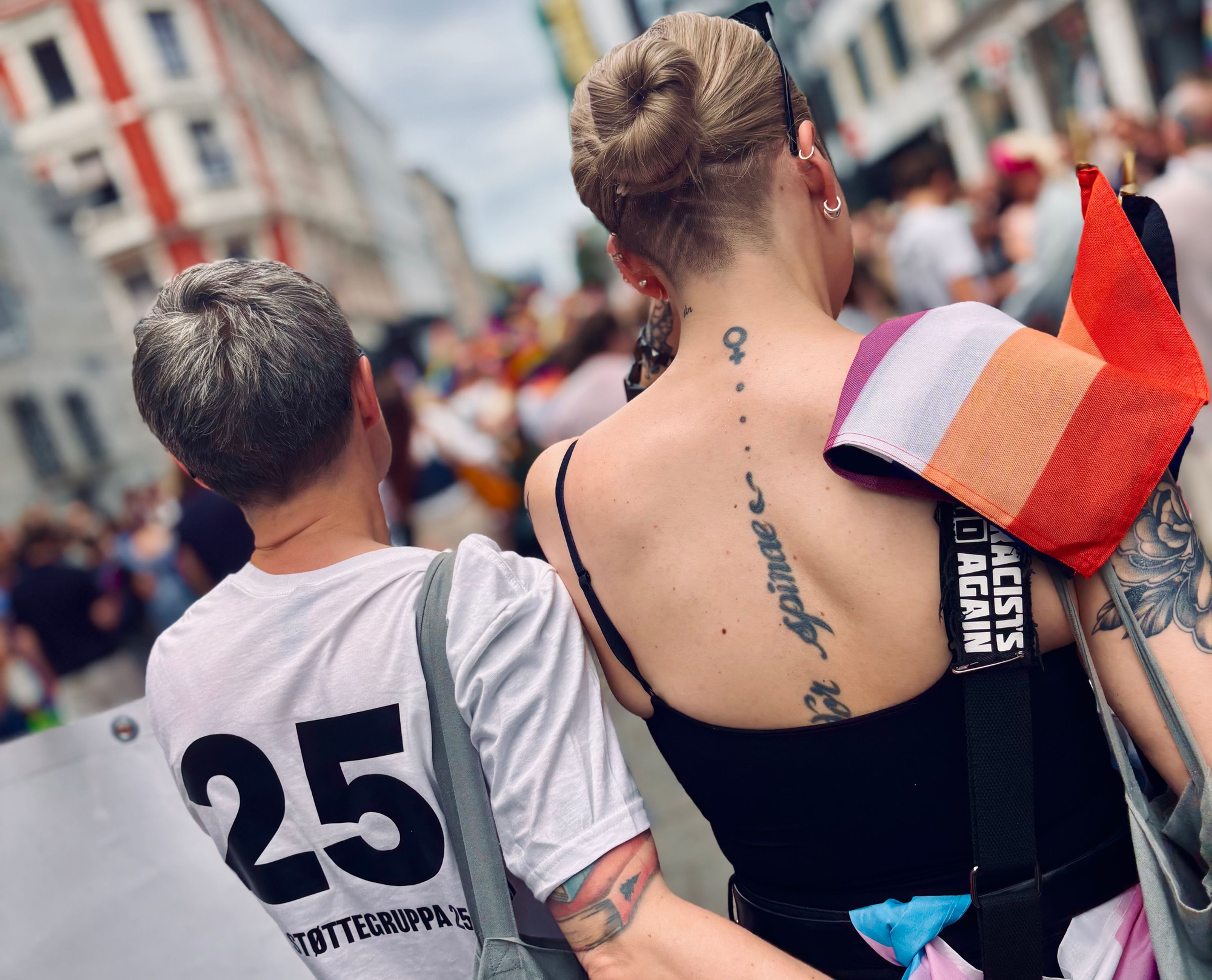
Long before modern Pride parades, many societies were more open to gender diversity and same-sex relationships than we often acknowledge today.
India is one example, where until British colonization, they recognized three genders. This was brutally changed with colonial legislation such as the “Criminal Tribes Act”, which criminalized the third gender and replaced centuries of social acceptance with societal shame, stigma and exclusion, through the imposed sanctions under the new act. Another example from Botswana lasted until 2019, when Botswana’s High Court in Gaborone unanimously voted to overturn laws from the 1800’s criminalizing homosexuality. Similar patterns can be found across colonized societies in Africa, Asia and South America, where colonial powers introduced legal systems and moral frameworks. These historical shifts are not confined to the past.
They continue to shape politics and public opinion around the world. Uganda is a recent example, where ties to Christian evangelical organizations in the United States have played an important role in supporting anti-LGBTQ+ legislation, including the 2023 Anti-Homosexuality Act. Yet in much of the Global North, these developments are often presented as if they were local expressions of culture or politics, rather than part of a larger history shaped by colonial influence and the export of conservative ideologies. Leaving a narrative that not only obscures the historical roots of discrimination, but also makes it easier to view the struggles of different groups as separate rather than one common struggle. Seen over the recent years with the large movements of #metoo, #BLM, #freepalestine and #pride. Where many felt a unique opportunity was missed to unite larger movements, by connecting the rights of different groups under a united cause. Because when we lose sight of history, it becomes easier to see discrimination as something that belongs to certain cultures, rather than something that has been shaped, exported and reinforced over time. Depriving us of the collective strength found in standing united behind a cause, and ultimately further polarizing the debate surrounding queer identity.
History shows us that the main problem with polarized factions dominating public debate is not that the distance between the extremes increases. That is largely an illusion, as the extremes often remain where they have always been. The deeper issue is the creation of a false sense of support for these extremes, constructing another illusion, of that the polarities are supported by the many. Creating the “pull of the masses” where mass psychology kicks in and creates compels the general public to choose a side. Those who wish to avoid passivity in fear of "cancellation" or irrelevance, end up leaning into one of the camps, often in a position far removed from their actual perspective.
Meanwhile, the vast space between the extremes, a place where one could stand with both curiosity and a sense of vulnerability regarding one’s views, remains empty and invisible to the public. Hiding the vital and safe space for healthy disagreement where we could gather to share perspectives, challenge each other, and discuss among people we like and care about. Where our half-formed reflections could evolve into educated opinions within the safe space of people who respect us regardless of our viewpoints. A space echoed as vital through history for society.
Today, in contrast, we see the extremes foster insularity and a search for validation to defend our views, while treating everything else as a threat, blinded by the captivating narratives of the extremes. In such a climate, the risk of sharing half-formed reflections can be exclusion, harassment, cancellation, job loss, reprimand, or being shamed back into one’s shell by the hegemony of the extremes. Shaping the fragmented majority we see in society today, where many stand passively with the polarities in which they don't fully align, disconnecting a large part of society. A majority unable to connect beyond the narratives of the extreme polarities
“The majority is drawn into believing this is a debate, as if the existence and identity of others were something we, as the majority, had the right to dictate. Disconnecting us from our humanity and distracting us from the very things that bind us together.” Jimmy, Founder of The Human Aspect

The other side of this tragic dynamic is the way this often manifests in the daily lives of the queer community. When one already carries a minority identity that feels difficult to express openly within a heteronormative society and a polarized climate, many internalize this skewed narrative as a subconscious truth. Reinforcing existing insecurities about one’s own existence: the idea that your existence threatens the majority’s existence, and that the only safe haven lies at your own "pole."
Particularly critical during the often-insecure process of "coming out", transitioning from feeling different, to finding your footing in, and eventually embracing your queer identity. If one does not see that safe space reflected in one’s immediate surroundings, many queers face a choice: Suppress their identity entirely and lean into heteronormative expression, or lean into the opposing pole and internalize homophobic thoughts and rhetoric. Both often lead to a self-destructive existence characterized by hatred toward one’s own identity.
This hatred is essentially a hybrid reflection of society’s hostility toward queer people and your own inner insecurities, resulting in heavy self-loathing for not fitting into “the group”, which is society. It fosters the perspective that one’s own identity poses a direct threat to being included in the community. One’s desires change, and not because one truly fails to accept oneself, but because one mirrors society’s rejection.
A rejection that may be real, partial or entirely imagined, yet it remains unverified because it stems from an unchecked perceived rejection by family, the local community, and society at large. Weighed down by the underlying tone of society, one you don’t want to experience, so you choose one of these paths to bypass it. Opening up the space for one of the most common experiences among queer people - loneliness. Often manifesting into living a double life where your identity is not integrated with your lived life, all in the hope of fitting in, or in protection of yourself.

The power of algorithms
This phenomenon is amplified by the modern layer of social media ruled by the power of algorithms. The connection between Meta and conservative politics in the US is another example of modern day structural discrimination and social control. Awareness campaigns or content about queer identity was, and still is, flagged as political content by Meta, giving it lower ratings and blocking it from using ads. Knowing algorithms favor posts that trigger the strongest emotions, we instead see anti-queer content gaining viral spread, due to its engagement with both sides, those agreeing and those opposing. Contrarily, we see queer supportive content gaining traction due to a battle happening in the comments, where hate speech and abuse and queer defenders meet to brawl. Creating a digital trench-like environment, where people's queer identity becomes free range for unfiltered expressions of opinion, fear and insecurities, expressed as profanity and personalized attacks, often completely unhinged from the cause.
Meanwhile, we are completely blinded from the fact that we are debating someone's right to exist and, by extension of that, also our own right to exist, as you are never far away from being a minority in some parts of your identity. Which highlights a disconnect in the fact that most of us feel similar insecurities, carry a fear of exclusion, but also life experiences that could have connected us beyond the narratives. The result is that the excluded start to exclude others, and the hated start to hate. The loving nature of pride and the queer movement can end up hating society and decorating its perception of the world based on the hostile narrative in which they have been living. We are then left with the society we now see unfolding: where social exclusion is increasing at all ends, and what is considered accepted is further away from the authentic, and closer to the tragicomic characters that reflect different phases of human reactions. Reactions to life, to challenges, to fears and to the traumas we all face.
This digital hostility is blinding us from the underlying question: What are we really defending?
Many of us end up leaning into our own navel-gazing perspectives that move us further and further apart from the reality that is unfolding in society. For example, defending the macho male narrative that “strong” men don't cry, and that gay men are threatening masculinity. People end up defending an unhealthy suppression of feelings as a misunderstood concept of strength, impacting young boys growing up. Where many young boys feel wrong if they are in touch with their inner world, causing the same dynamic of inner hate towards the natural, and making them vulnerable for polarities such as “the manosphere”. The polarity feeding of the consequences from the lack of healthy spaces to explore their identity, while upholding a damaging stereotype. Equipped with infused glasses, by the echochamber their algorithms have created, to see the world through. All designed by the opportunists of the manosphere to confirm their narrated truth. Making many young boys, but also girls, easy targets for the homophobic pole of the #pride debate. Because a clear sign of the power of polarization is when “common sense”, connection with ourselves, and our moral compass are placed in the back seat, while both sides focus on doubling down and defending their arguments, as if we are in a school debate.
Even when your gut feeling tries to challenge you, before you press enter on your comment, you assure yourself that you are defending something. Posting a comment which you would have never said face to face to anyone, but that now becomes part of your new interaction with the modern world; a part of you, your opinion, your standpoint and a little piece of who you are.
Many end up defending the narrative they’ve aligned with, even if they don’t fully understand, nor support it, standing with the notion of this being something sacrosanct that is tied to the core values of humanity of your polarity. In doing so, your behaviour now crosses your own values to defend it, in the battle against “the other”. Further suffocating the healthy spaces that could foster respect and curiosity and further inflating the narratives that is dominating everybody's feed: that the polarities are gaining traction, society is hostile for queers, and that we have to choose sides. And that this choice defines who you are as a human and your place in society.
Another self-upholding part of this dynamic is the provoked “self-isolation” of the abused group, in this case the queer community and supporters. Within psychology, when you have been abused and your boundaries have not been respected for a long time, a vital part of healing is re-establishing healthy boundaries. This is where social media's “psychologification” comes in, by oversimplifying psychological concepts and feeding them to the public. The first step, according to this narrative, is to re-establish exaggeratedly tightened boundaries, to comfort the nervous system, body and self into feeling safe. To successfully do this, you effectively alter your narrative of the world for the sake of the healing process. This often means placing your needs in the driving seat of all of your actions. Given the experiences many queer people have endured, this feels natural, and is a healthy step as part of the healing process. The problem arises when this is misread as a way of life, and as a lens of which you see the world from.
By for example only surrounding yourself with people who make you feel fully comfortable. In practice, this often translates into “people like you”, while excluding people that challenge your new narrative, even family and friends. In this case, that might mean heterosexual people, and anyone not fully onboard with the polarity of the #pride movement. This state of mind, if not aware, often leads to treating everyone who voices some disagreement as an adversary. Effectively suffocating nuance in the conversation between you and them. For example a family member or a friend voicing unease about change, or objecting to one specific public act, gets branded alongside extremists. Calling moderate critics or even people simply voicing a question from a majority perspective, as "homophobes" in the intention of defending your right to exist by aiming to weaken prejudice. Often resulting in the opposite, convincing some they have no place in the conversation, and pushes them toward the very extremes we claim to be fighting.

Let us look at this through the lens of one of the most common discussion surrounding #pride. That someone reacts to what they perceive as overly sexualized displays during Pride. A questioning of an act in the larger whole, but can we view that objectively in the context of queer identity history? This reaction is often conceived as a threat and interpreted as criticism against the larger queer identity. Often shutting down legitimate debate and erasing the line between being able to raise concerns within or against the group, and threatening the group. This results in the same social control dynamic within a homogenous group of queer people, where the accepted opinion, expression and/or actions narrow. This limits the very sense of freedom the community originally represented, after years of not fitting in, often leading to an even deeper grief for those experiencing this internal social control and rejection. Resulting in that at a larger scale we see all criticism branded as bigotry, fueling exactly the polarization and cancel culture dynamics that undermine the inclusion the movement claims and aims to defend.
In the current climate and considering the history of "public decency" being used to police the queer community, already raised in this article, this is not a simple matter. Because where exactly that line falls, is itself contested: what one person sees as neutral criticism of conduct, especially from a majority privileged perspective, another may reasonably experience as social control and a familiar pretext for targeting their identity. Therefore we need to recognize this precontext to face any version of this argument if we want to reckon with that tension rather than assume it away. Bringing front again the need for the inclusive space which holds duality safely.
In a therapeutic process of healing from abuse, the next step would be to move these boundaries step by step, inviting and including new elements of “threat”, to slowly build your tolerance and enrich your world again with perspectives. This means slowly and safely moving back to healthy boundaries, and it’s considered the most important step to live free from fear. A step often forgotten in our self-actualization-focused society, where the power of the community has been degraded over time. This is where the queer community has showcased massive strength over the previous decades in which larger society has plenty to learn from.

Queer communities grew and transcended with the digitalization of the world, expanding the community from small closed spaces behind hidden doors, to massive inclusive festivals, parades, culture hubs and bars globally. The nightlife has always held a special place for the queer community, as showing affection was and still is criminalized in public in many corners of the world. Explaining why the questioning over sexualization at Pride is perceived as a threat to queer identity, because it’s connected to freedom of expression and affection, as a universal right. Still in liberal cities, many experience being sexualised as lesbians, violently abused as gays and trans for their expression, making safe spaces to express affection vital and sacred for the community. Like for example lesbian bars, sauna events for trans, or men-only gay bars, that ensures safe spaces for these marginalized groups. Many describe these spaces as “coming home” after living a suppressed life on the fringes of the heteronormative society. Where many other communities lack diversity, the very nature of the queer community invites people from across the world, with their queer identity as their access card. Today many communities are open to the wider LGBTQ+ identities, and their wider allies. This has opened up the power of unity beyond the polarities, creating space where the narrow boundaries are moved to open up space for healing with others. Through organically interacting with the stories of others, you widen and potentially even challenge your own, all in a safe space of unity behind the banner of “same love”. It connects people based on their lived experiences, more than their gender or sexual identity. It connects people through their lived lives, through their human aspect.

The power of narratives in controlling the masses lies in concealing the majority sentiment and keeping that center safe space for unprocessed reflections well hidden. Here, an existential right has been transformed into a narrative and debate, where we can work to connect beyond and turn the trend. This is where storytelling comes into play, and the power of uplifting the stories of the queer community is ever more important.
The pride movement was started as a reaction to one polarity raiding the Stonewall Inn, a gay bar in New York, June 28th, 1969. Local queers, supporters and BiPOC (Black, Indigenous, or People of Color) icons like Marsha P. Johnson, Stormé DeLarverie, and Sylvia Rivera fought back and protested for five days (The Stonewall Uprising). Leading to the first pride parade the following year, where they organized the Christopher Street Liberation Day March, engaging thousands of people marching 15 blocks to the Stonewall Inn. It was a march demonstrating against housing and job discrimination and a space where people wanted to showcase “pride” in who they were. The Pride movement grew, and in Norway it showed its first signs with a march behind a queer banner as part of the May 1st march, 1974. The following year, 1975, saw the first pride celebrations and parade in Oslo, coinciding with the 25th anniversary of Det Norske forbundet av 1948 (DNF-48, forløperen til FRI). Over the next decades, the movement continued to grow, still mostly a queer community march, before we got exponential growth over the last two decades. Many accredit this growth to pop-culture storytelling like Will & Grace, Glee and The L-Word, which successfully connected beyond the community and brought representation to the main stage, rather than as a side character. Brave storytellers also helped by sharing their identity to the world center stage, like David Bowie and Freddie Mercury, in the midst of the AIDS crisis in the 80’s. With them, the Pride movement grew beyond the queer cause during the 90’s and into the 00’s, where Pride represented the existential right of “same love”.

In Oslo, this caught real growth after the first Euro Pride was hosted in Oslo in 2005 and 2014, where it led to campaigns like the 2017 “Walk for me” campaign initiated by FRI (The Norwegian Organisation for Sexual and Gender Diversity). Where you could walk proudly for someone who did not find it safe. This transformed the pride parade in Oslo into a nationwide spectacle where more than 100.000 people walked the last years, and many more celebrating, observing and watching from close and afar. Similar developments have been seen across the world, where for example in Budapest, Hungary during their 30th anniversary for #pride, they gathered more than 200.000 people. Despite the Hungarian government banning the march, citing child protection laws, and threatening to use facial recognition to punish participants. Making the 2025 Pride parade Hungary’s largest anti-government demonstration in years and initiating what the following year resulted in a historic shift in power.
Pride across the world has created that very space where people feel comfortable being part of it in different capacities, unjudged and invited, where you could come with your unprocessed perspectives, and allow your perspectives to evolve organically. Thanks to the size of the parade, it also somewhat imposed itself on the lives of those skeptical or potentially identifying as part of the other polarity. This contributed to challenging their views and perspectives, and hopefully touching that inner conflict behind their stance. As the Hungary example has highlighted over the last year. Beyond the parade, most larger cities across the world, including Oslo and Budapest, host a wider program as part of pride month, including a wide range of events, such as movie screenings, debates, art exhibitions, dance shows, and parties, for all ages, backgrounds and perspectives. We celebrate the diversity of the queer community and humanity as a whole, standing united in a struggle based on the principle that “no one is free until everyone is free.”

Now that unity and progress are challenged, by the rising polarization disconnecting us and distracting us into isolation, apathy and hate. Regardless of our perspective we have a responsibility to react and to zoom out to preserve that secret space: the space where everyone is invited and where pride conquers prejudice to connect us beyond the power of the polarizing narratives. Because inclusion is an act continuously upheld by all of us, beyond hard fought milestones like queer rights legislation, pride flags waving in the wind across the country, and rainbow colored access badges. For changes to last, the majority needs to take responsibility to uphold that inclusive space, as the risk is much lower for the majority. Where we engage in deeper conversations in such spaces, beyond social media gimmicks, and dare to listen more than we share. To hold space for the duality of different narratives and perspectives being just as true at the same time. Because we all profit from a society with a safe space to explore our identity and form our perspectives organically together.
So let us keep uplifting queer stories, stripped of context, where lived experiences connect us through heart and “same love”, regardless of who you are or who you love.
"Remember that this is about somebody's life and existence" Vikram Kollmannskog, author and professor in Gestalt therapy at the Norwegian Gestalt Institute
Watch the Full Documentary
Jahira 
Noah 
Kathrine 
Sven Camillla 
Aksel 
Momo 
Sergio Martine