
Perspectives from global mental health: Shifting power dynamics, confronting colonial structures and discrimination

Updated: Aug 25

Jimmy Westerheim
Founder of The Human Aspect
“How far back are we comfortable to go in our endeavor to make the world a better place?
A question that has never been answered when it comes to colonial structures and racism. A question in need of an answer from society, because I believe that change happens based on how far back we choose to go in our endeavor to resolve this societal root problem that is undermining our entire society” Dixon Chibanda, founder of Friendship Bench
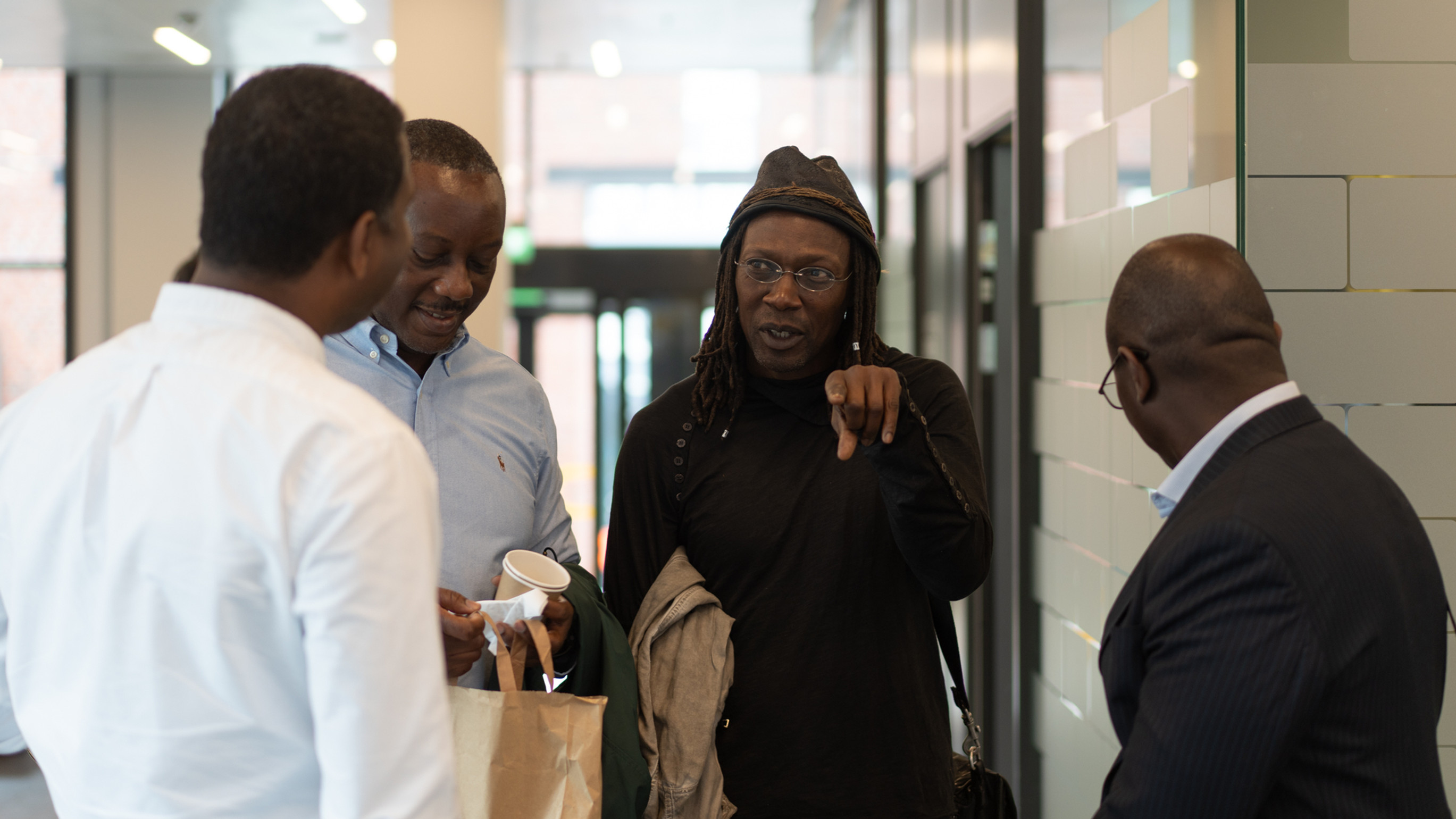
These powerful words formed the basis of the core question at the 3rd Nordic MHPSS conference in Oslo this summer: How will addressing discrimination and confronting colonial narratives create the foundation for a more connected and impactful approach to humanitarian work and beyond?

A crucial question to face because the sector is built on the bedrock of colonial structures that fueled the power imbalance, human rights abuses, and blatant discrimination that the sector was established to respond to. Discrimination seen across society and mirrored in the sector, but yet the sector has not fully faced its history. Keeping its present deeply entangled in the colonial structures and discrimination of today, hindering all efforts to move beyond the discrimination within the sector, both direct and indirect.
This creates a paradox, very much felt across the sector every day by its backbone of workers, especially the national staff, but also the wider staff and those receiving care. The people proximal to the problem that the sector swore to address, whose needs should be the key drivers for decisions, instead they often feel belittled, silenced and left out of the conversations. Two main pillars where the sector's history and present day are closely linked and fully felt daily, yet rarely or not at all addressed. This leaves the dire consequences of discrimination to continue its damage and continuously felt across the entire humanitarian chain.

“Cause you are not allowed to talk about it. That is what makes it more dangerous, because if you can see it, but you cannot confront it or not even talk to anyone about it, you end up keeping quiet, trying to let it go, but it stays inside you”. Simon Marot Touloung, Co-founder of African Youth Action Network (AYAN)
During the period ironically labeled “The Enlightenment” in the late 17th century, reaching its peak in the late 18th century, racial taxonomies to categorize humans were introduced through pseudoscience. A period heavily influenced by cultural biases, the taxonomies were introduced, to try to justify and rationalize the abuse and enslavement of people from the colonies. Firstly to the wider population in the colonizing nations, that had started to show signs of resistance towards these practices. Where this propagandic narrative of false taxonomies were deployed to counter the questions, by linking the psychoscientific false claim of superiority and inferiority to ethnicity, background and culture, anchoring the discriminatory divide in the “us” and “them”. It was mirrored in the colonies as an additional tool of active suppression, by suffocating any notion of equality or resistance in the people from the colonizers and their supporters, against the abusive and suppressive practices. Entangling science as a tool of creating powerful narratives for those in power in their efforts to uphold the colonial structures and status quo.
Narratives we now, centuries later, still deal with the consequences of, despite the pseudoscientific concept being long proven false. Knowing genomic research has long unequivocally refuted any biological conceptions of race, where data shows significantly larger variation within self-identified groups than between them. Physical traits (phenotypes) like skin color, hair types, height, muscle fiber compositions and other traits are known to be historic genetic traits of adaptation to a region, rather than indicative of any underlying genetic division. Still, these false narratives have stuck through time, leading to the need of a new scientific debunking to move beyond the pseudoscientific narratives of “race”, and place it in the history books where it belongs. Through for example raising awareness about our language and how we use words that uphold these narratives subconsciously. Raising questions about using the word “racism” as it subconsciously upholds the narrative of any such notion existing. Arguments on the other side argue that by including it in discrimination, it’s watered out and mixed with other suppressive practices towards gender and other labels. For this article we have decided to continue with discrimination, but yet being specific about what layer of discrimination we are addressing, as a way of moving beyond pseudoscience of the colonial era.
Discrimination is a well-researched field, yet itself discriminatory in its design, as most papers and findings often stay inaccessible to those who experience the discrimination.
Mainly accessible to those who hold a privileged position, often former colonizing nations, including the organizations and institutions it addresses. Contributing to keeping this important issue largely unaddressed in a growingly polarized world. Emphasizing the intertwined history of Western academia and research with discrimination and colonial structures. Where research and Western science were introduced and established as a new set of “truth” of which decisions, investments, policy, and narratives could derive from. Fully integrated and visible in society today, through the widely used term “evidence based”, as a requirement across media, politics, grant applications, humanitarian programs, literature, policy and education. Today’s research practices arose in the 17th-century scientific revolution in Europe, with emphasis on systematic observation, experimentation, and mathematical modeling to understand the natural world. Diminishing the deeper connected and holistic practices of the ancient Greeks, Romans, Egyptians, and those of the Islamic Golden Age & Transmission, that sparked the European Renaissance. Widely neglecting the wisdom and practices from “colony” regions in the south, and their great empires. Empires such as the Kingdom of Kush and the Mali empire of the African continent, the Maya and Inca empires of the America's, India's golden age empires, Khmer empire, and Chinese dynasties in Asia. Not forgetting the Mongolian empire, to the Steppe Empires shaping the famous “Silk Road”, connecting east and west to form global trade. All in which are empires that shaped our history and filled it with deeply rooted science, astronomy, mathematics, “soul studying” and medical practices, but also social- and governing policy and structures. Ancient wisdom and practices being systematically suppressed in the re-writing of science through the European lens, to actively refute this wisdom as “outdated” and “non-scientific” in nature”. Labeling all of those who practiced it or based their perspectives on it, which was larger parts of the world at the time, as “less developed”, “less intelligent" and falling behind modern science. Adding this intellectual robbery to the consequences of colonialism.
Today the colonial ghosts still haunt the scientific sector, where we see the scientists with the most cited papers are disproportionately working in former colonizing nations, including some former colonies like the US, Australia, New Zealand and Canada. For decades, researchers have benefited from the colonial structures by being able to study both nature and people in former colonies, with little to no involvement of local researchers or academic institutions. Continuing the intellectual abuse by systematically robbing the local capacity of accreditation for their work, intellectual property and heritage history, called "parachute science”. For example, a study from 2019, found that fewer than half of the papers on infectious diseases in the African continent had a first author from any African nation. Emphasizing a well-known blind spot of privilege, where the world of the less privileged stays widely invisible to those not experiencing it, often only seen from the outside through popular culture or stories. Making many researchers blinded passengers of the discriminatory system, subconsciously neglecting their professional integrity, instead of actively supporting their colleagues by integrating local institutions and researchers in their work. Where this suppressive reality is so distant from your own privileged reality that you feel little to no connection, until the bubble is pinched open by experiencing it yourself or being made aware through storytelling, art, and other ways of deep connection. Making raising awareness around these discriminatory consequences and “privilege blindness” a responsibility of the privileged, and here the field of research should take action, to re-establish their credibility as a sector. Managing the direction and power of research is a crucial step in shifting the power dynamics, through disconnecting it from these colonial power structures once and for all. Reconnecting with local expertise, those experiencing the phenomena researched (the core the data) and the suppressed heritage of ancient wisdom of science. All to ensure that the research and data is driven by those proximal to the phenomena researched, and locally utilized to drive the local visions for change.

“We have a huge responsibility to make sure that our research findings are made accessible widely, and in formats that are of interest, relevance and use to the people we are studying. That’s why I made the film Colour, as I felt film is something that can bring people together and that can trigger discussion.” Hannah Strohmeier – Researcher at the Center for Global Health, Charité - Universitätsmedizin Berlin & the director and producer of Colour
The Western academic sector was inspired by previous empires and built by national elites as a new form of controlled rise in society. Strengthening control of the largest institutions, managing the hierarchy and status of the different schools, and the labour market of which the students entered. Shaping the workforce of their colonial and industrial vision for the world, built on the backs of the foundation of the workforce pyramid, the abused and enslaved people from the colonies. A system well displayed during colonial times, both in terms of how exchange programs to Western institutions worked, but also how the intake to universities in the colonized countries operated. Introduced as a new layer of societal politics to create the narrative of “false hope and fairness,” acting as a facade to cover up the discriminatory foundations that it was built on. Selling the idea that you could educate your way out of your family’s starting point and circumstances, including those who came from the colonies that were uplifted as examples. Another persistent ghost of the colonial past still alive today, and it was further strengthened by pop culture as “the American dream” narrative. Often referred to as the “golden argument of defence”, when criticizing the modern day capitalistic democracies like The United States. Effectively controlling who rises to power, and upholding the widening divide between the working class and the elites, by creating a buffer of aspiring middle class in the middle.
Plentiful examples of how the colonial areas' practices have been re-branded to stay in place. Like when the modern day capitalistic system was built, students across the world in the last decades have been sold the idea of “the great globalization” that will fuel the world’s economic growth. A narrative sold as the answer to how we would effectively end poverty, through global trade “free markets” and “free flow” of goods. A dream supported by many until the 2008 economic crash, when the new shiny narrative was masterly enforced using modern technology.
A system now blamed by many nationalist voices as the driver of the downfall of their national economies. If zoomed out, revealing itself as a modern day colonial structure, built on the imbalances of the world. Where a European retailer can sell its clothes for “affordable prices” in their stores, because of the exploitative system. It can buy raw materials from a corporation, extracting such materials largely from the global south at “robbery” prices, from regions acquired during the colonial era and often using local workers from a suppressed labor market, often utilizing local poverty mechanisms. Shipping such materials to producers in retail “havens” such as “made in India, Indonesia, Vietnam, China, or Taiwan,” to mention some “historic cloth tags”, upholding the colonial structures of the past, while continuing to suck its profits to the top of the pyramid. Letting enough trickle down the pyramid for its profiteers to uphold the structure themselves, while somehow managing to uphold the narrative that this benefits "everyone".
This all connects back to the humanitarian aid sector's biggest existential dilemma: the very crises it exists to address such as human-made poverty, conflict, climate change-driven disasters, and global discrimination, are also the conditions that sustain the organizations need to exist. Caring for the less privileged in society is no new notion, and is cited as a great value of the world religions and ancient societies, dating back as old as written history is documented. Both as a virtue of which the privileged were expected to do as part of their faith, and as a governmental tool to maintain order, health, and peace among the people in the same way as we have seen across the last 1000 years. Establishing the argument that such practices are rooted in the innate human empathy for the unfortunate, and opportunized by politicians as a strategy. Like in the infamous “bread & circus” strategy famously reflected upon in European politics by Cicero, as a strategy to maintain order during rising tensions over the inhumane conditions among the lower social classes in the Roman Empire. Believed to have been the driver behind the construction of the Colosseum where they gave people free bread labeled as “charity” of kindness, and free entertainment to distract them from their reality, much like we see today in new forms. Hindering people facing suffering, from biting the hand that “feeds” them, despite living in the consequences of structured discrimination and socioeconomic suppression.

“We can easily replicate the dynamics of power that we struggle against, because racism, and sexism is ingrained in us through the stories that we hear almost before we are born - It built the environments and systems we work we in and it has tainted the very tools that we use every day” Coumba Toure, Founder of Invisible Giants
Humanitarianism in today's “suit” was established in the mid 1800s, where the wounded soldiers on an Italian battlefield led to the founding of the International Committee of the Red Cross and the first Geneva Convention in 1863 and ´64. Giving neutral, protected status to medical workers and field hospitals to create the foundation in which they would tend to these soldiers. The sector expanded widely during the Irish and Chinese famine and boomed as part of the two world wars. Following World War II, the United Nations was formed, and the Marshal Plan transformed the sector into a formal tool of international development, deeply integrated into foreign policy across the world. Making it possible for the UN agencies to seize control of the sector, built on the expanded international humanitarian laws and treaties of the UN. Despite the open skepticism and criticism, the sector grew and established itself as a global reaching sector.

With the evolution of the Cold War and the growth of covert operations, meddling with national politics and fueling coups and revolutions in the name of “global peace”, the need for the newly established global humanitarian aid grew, and with the growth it got further "politicized.” Seeing severe use of violence against alternative ideologies or systems that challenged the capitalistic project, but also addressing the power imbalance and colonial structures still remaining or continuing in their mere shapeshifting forms. Voices like Patrice Lumumba, revolutionary and Prime Minister of DR Congo, leading the Pan-African voices speaking up against colonialism, until his assasination in 1961. The same year as the suspicious death of Dag Hammarskjöld, Secretary-General of the United Nations standing up against the security council and power imbalance inside the UN. Or Prime Minister of Iran Mohammad Mosaddegh that was exiled after the UK and US aided coup against his government. A government that threatened the exploitation of the oil rights and access of the colonial powers. A recognizable scenario from recent history with US led wars in Iraq, Afghanistan, Libya, Venezuela and other countries across the globe.
During this period, humanitarian aid grew fully entangled in foreign policy as leverage in aggressive negotiations for natural resources, territory, and business treaties, but rarely directly connected. Keeping the surface seemingly clean in this newly shaped tool of corruption and power. Creating the paradox of which instigators of violence were also those offering aid to the suffering of the same abuses. Leaving national politicians between a rock and a hard place, often forced to choose between the short term suffering of their people, or giving away the resources of their land, in exchange for short term aid and funds. Humanitarian aid was also used as a political tool in the global north, to counter the anti-war movement, by uplifting the humanitarian needs and the efforts done to meet them. Perfectly orchestrated to shift momentum from resistance to support nationally, and at the same time secure goodwill globally. Expanding the dilemmatic duality, where the good intentions and empathic workers, both locally and internationally, served those in need, while upholding the needs through the same aggressive foreign policy.
Creating the foundation for cherished white-washing campaigns like the “Live Aid” concerts for the 1983-85 famine in Ethiopia, featuring a mix of stars like U2, Queen, Bob Dylan, Tina Turner, David Bowie, Madonna, and Elton John, broadcasted to an est. 1.5-1.9 billion people, and raising 125 USD million. Spearheaded by the song called “Do They Know It's Christmas?“ containing the chorus “And there won't be snow in Africa this Christmastime. The greatest gift they'll get this year is life (Oh). Where nothing ever grows, no rain or rivers flow.” Words upholding the narrative of the need for humanitarian support, instead of addressing the root causes behind it. Further spreading the “iconic” images of the suffering, “needy” and underdeveloped people of the global south, in need of support from the global north. Continuing the belittling of the African continent at large and their people, while spreading and upholding stereotypes and narratives from the colonial area of the less valued and capable. Framed to be in the name of creating engagement, and sympathy in the people of the global north to collect donations to fund the humanitarian machines. Transitioning the former colonial structures into this new system of structural discrimination, polished narratives and upheld power imbalance, where the humanitarian sector is in the middle. Establishing the passive support option for people to come together to collect and give donations to fund the less privileged, following the religious traditions of “collect”. Instead of coming together to stand up against the system upholding the global abuse. Paving way for the new funding stream that the humanitarian sector built its latest expansion on, turning the sector into today's mastodons.

“If you feel like you’re disadvantaged because of where you’re coming from, how you look, how you speak, that has serious emotional and psychological effects on an individual.” Lukoye Atwol, The Dean of Aga Khan University Medical College, East Africa
History has also shown us how discrimination is contagious and continues between those who have suffered it themselves, especially if they have been receivers of care in a vulnerable position.
Creating a subconscious submissive gratitude notion in which mirrors the discrimination from the prehistoric eras that has manifested in many minds. Where the long-term suppression of colonization led to that many people felt inferior, called “colonized mindset” in the world of psychology. Transmitting the external experiences of discrimination, abuse, and oppression into internal feelings where inner values, abilities, cultures, and language hold less value than those of the colonizers. Often manifesting in self-doubt, shame, and accepting foreign traditions without questioning them, while often suppressing or rejecting local traditions, wisdom, and history as less developed and not relevant for the future. Painting the people as traditional and in need of support and humanitarian aid, to “help them” to “achieve” the developmental level of the narrated “standard” of former colonizers in the global north.
Resulting in that the suppressed subconsciously contribute to the systematic oppression of themselves and their peers, as the ultimate layer of the abusive colonial dynamics. In which consequences do not stop in the individual or group who has endured it, called “generational trauma”. Where the trauma is inherited through generations, transmitted to those who might not have lived it in its most aggressive form, that grew up in areas with strong discriminatory history, such as former colonies, areas, and regions. A mechanism not limited to area, as it may also appear in how first generation immigrants encourage their children to embrace the culture of the country in which they are raised. Attributed to the narrative of "successful integration” being when a person who settles in a country measures their level of integration by how adapted they are to the country's culture, behaviour and attributes. Effectively measuring your worth in the society you are raised by the level of how much you replace your heritage with your environment's dominant culture. Another mirrored sophisticated layer of colonial structures rooted in some misconstrued nationalism. Coming off as extra contradictory in former colonizing cultural meltingpots as the UK or a country built on mass immigration like the US, Canada, Australia or similar. All countries that have battled severe discriminatory periods dominated by aggressive nationalism, violence and discriminatory abuse just in the last decades.
As the former colonial structures were criticized and many colonized nations fought for their independence, after the second world war, the structures changed. What was more blunt was no longer accepted by many in the general public, on the back of important movements like the social justice movement, and the anti-war movement through the 60’s. Followed by tense, violent and turbulent decades with increased US and European dominance spearheading the “democratization” of the world, including the Vietnam war, the Iran-Iraq war, the Gulf war, and the fall of the soviet union. All happening in tandem with the development of technology televising the suffering, and the global conditions, we saw a resurgence of support to the social movements. In some ways Peaking with the liberation in South Africa from apartheid in 1994, sparking a global movement for a more inclusive world where equal human rights were placed at the center. Mandela’s powerful words, when being sworn in as the first multicultural president "Let there be justice for all. Let there be peace for all. Let there be work, bread, water and salt for all... Let freedom reign." brought hope to many of a more peaceful united future.
Instead of becoming the turning point in history many hoped for, it led to further polarization and growth of nationalism. The self-fulfilling cycle of the subconscious pseudoscientific concept of human differences being assimilated to ethnic groups, cultures and religions. A key colonial strategy, targeted to create divide internally between the people of the areas that they wanted to control. The “divide and conquer” strategy that was so evident in the Rwanda and Burundi massacres in 1994, where the colonizers had created a systematic divide between the Hutu and Tutsi groups from the turn of the century. Playing to the same false pseudoscientific hegemonism of social constructs such as status and ethnic backgrounds. Offering the Tutsi minority group more power than the other in their colonized public hierarchy using identity cards and propaganda. Fueling tensions between the groups and inflating historic conflicts between them from the past, driving further divide and chaos. Allowing the colonizer to continue their dominance, extortion and control of the country. A dynamic seen across the world in the last decades, including the Yugoslavian war, where history and ethnic backgrounds and religion were used for the same purpose. Both of these examples resulted in horrific massacres where former neighbours living together or even families ending up in conflict and splitting up to violently fight. Aggressively fueled by colonial era propaganda, using de-humanizing language to describe “the other” and placing “them” in the center of their narrative of the world as the cause of their suffering and that “cleansing the country” would solve it, leading to the historic genocides. In both cases, the international structures and systems led by the UN failed the people, leading to massive suffering, death and generational trauma. As the political world turned a blind eye and the system refused to “trigger” the powerful genocide Article II of the UN Genocide Convention from 1948, established on the back of the Second World War. Standing aside “monitoring” the situation while increasing the humanitarian response and deploying the new “peacekeeping forces” with the blue helmets. While NATO was actively involved in bombing cities through their 78-day aerial bombing, as another example of the entangled dynamics of war and aid. Still as evident today with the ongoing Palestinian genocide in Gaza, the west Bank, and larger Palestine, but also other countries and conflict zones across the world. These are just some of history's examples of the same, resulting in mass migration of people seeking refuge under the constructed humanitarian law. Effectively exporting the consequences of human made suffering, generational trauma and discrimination across the world through the forced and UN-organized refugee structures, infused with humanitarian efforts and programs along the way. Effectively making people stateless and stripping them of their identity, further abusing them, under the banner of offering them a systematic, inhumane humanitarian forced re-allocation.

“People were not born refugees, poverty is most of the time manufactured, there is a history that brought people where they are. And if we are serious about what we think and what we feel, we need to go back to the roots of the problems - What made people leave their lands, what made people unable to grow their food, for us to be humanitarian enough to feed them” Coumba Toure, Founder of Invisible Giants
Taking us to the last three decades of criticism of the humanitarian sector, where the critique has pointed at several layers like high administration costs, skewed north-south power dynamics, internal discrimination, and scandals, including corruption claims, direct abuse against staff and receivers of care and systematic discrimination. This is thanks to a growing movement of people being willing to speak-up and share their experiences. Despite the internal stigma and shame of the sector, discrimination is a growing field of interest for the global mental health scene. Not just as a global mental health concern that needs addressing in the people, but also internally in the humanitarian sector itself. Discrimination and inequality not only affect access to support, it hits at the core of our mental wellbeing & health, directly impacting the entire chain from its workers to those receiving support. Research consistently links structural discrimination to elevated rates of depression, anxiety, and post-traumatic stress: outcomes MHPSS practitioners encounter daily in humanitarian contexts (Williams & Mohammed, 2009; WHO Commission on Social Determinants of Health, 2008).
On a human level, we have seen an increased number of stories coming to the surface mirroring this research, fueled by social media, making it possible to drive some narratives beyond the former barriers of power. Seeing a shift in power from nations and governments to private corporations applying their social control to media through direct and indirect censorship. Where governments have switched tactics to “turning off” access to social media to effectively block witness accounts and stories from coming in or out. As we saw examples of across the Arab Spring, in Sudan, Iran, Bangladesh, Gaza (Palestine), and other active conflicts. Where censorship has now reached beyond the public media and into our homes, censoring our personal accounts of events, like for example seen in the coverage and “shadow banning” of posts about #Freepalestine, other conflicts, #BLM, #Metoo, LGBTQ, environment and equality. Showing a dual dynamic where these movements create space for strong locally represented voices, at the same time as silencing strong voices. Helping both the once #silent and voiceless feel empowered to speak, while at the same time exposing a new type of digital censorship with direct ties to political and physical actions. Where we saw the censorship transfer into the real world through violence, murder and unlawful imprisonment of several activist voices and journalists. Not just in countries of conflict, but also across so called “democracies,” reminding us of the widespread violent government sanctioned abuses, assassinations and tactics of the past.
Yet the movements and social media have uplifted stories of direct and indirect discrimination in all layers of the world, but especially the humanitarian sector, where the refugee chain has been central. Exposing and uplifting examples from the refugee voices themselves, as many document and broadcast their journeys live and share it. Exposing governmental tactics and abuses, violent border authorities, abusive international agencies, and forces applying their power. Including severe human rights violations embedded in national and regional policies like the EU-package to Turkey, to contain people and hinder them from reaching Europe. Making the suffering and forced movement of people a national opportunity, fueling another root in which the humanitarian systems grips the world. Instigating the structural discriminatory abuse that lies in taking away someone's identity through refugee status. Defined in the UN structure and placed at the center of the humanitarian sector's paradoxes. Leading us back to the internalized and often subconscious discriminatory abuses humanitarian workers apply when meeting receivers of care. Adding to the already endless list of abuses many of the people the global mental health and humanitarian system is designed to serve. Emphasizing the need to address the internal discrimination and abuses inside the sector, to raise awareness around the consequences of these structural malpractices and make transformational changes.
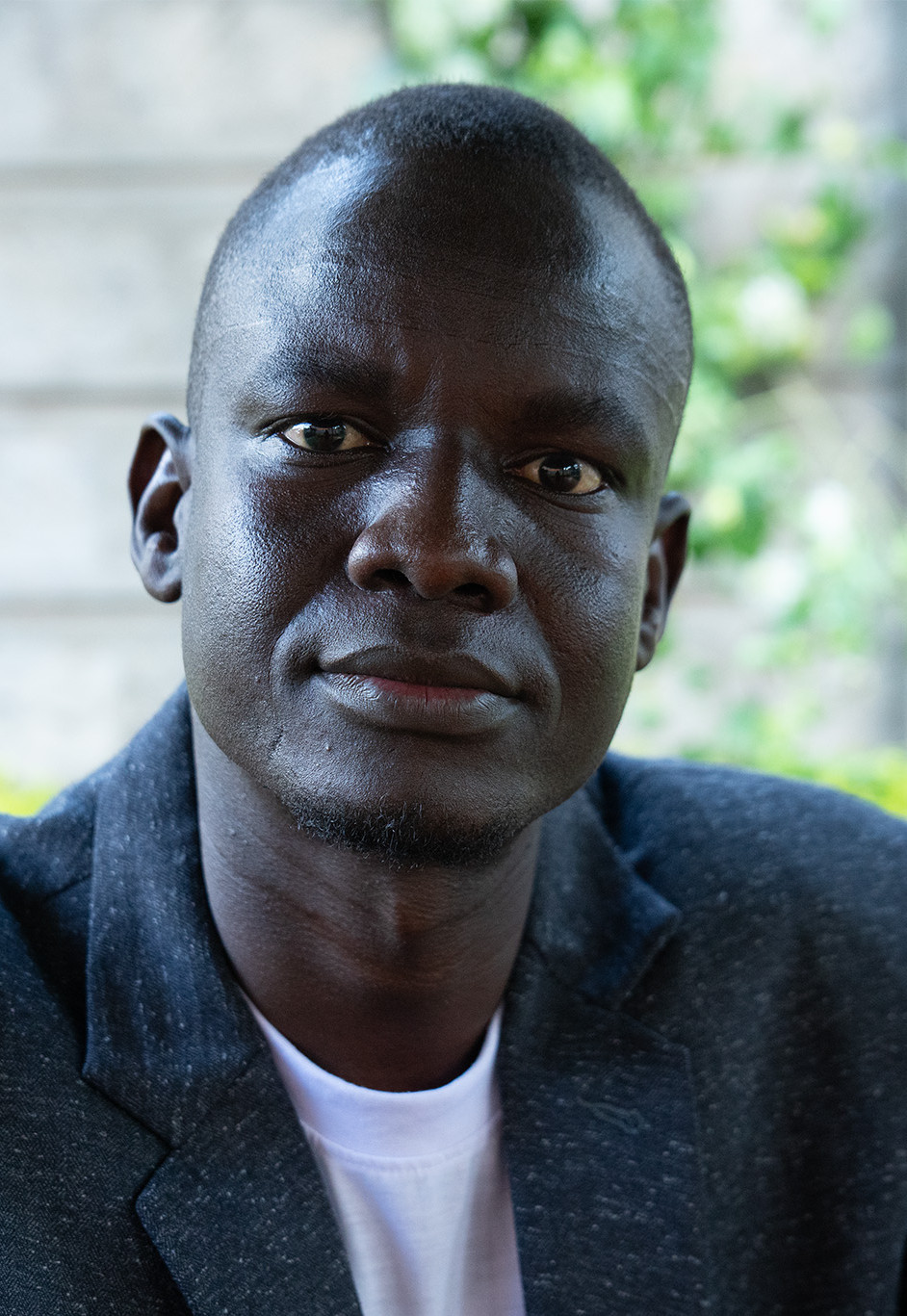
“When you are constantly reminded of your status, it makes you question yourself” Simon Marot Touloung, Co-founder of African Youth Action Network (AYAN)
Even though these movements have created a notion of progress, you can also argue that it falls under the same propagandic structure of “bread and circus”. Entertaining us, while continuing the atrocities on the ground, like we so blatantly have witnessed in Palestine, Congo, Somalia, Sudan, Yemen and many other countries over the most recent years. Heavily felt through the impact of the sheer mass of content filled with atrocities being bombarded towards our brains daily. Social media algorithms are designed to trigger our emotions, and in the beginning some could say that this contributes to spreading awareness and engagement. What we see over time, when the atrocities continue despite the obvious human rights abuses, is the opposite. We often see signs of collective apathy and compassion fatigue, where even the most engaged souls fade away in cognitive and emotional self-defence, where the digital world transforms into a way to be passively active, while keeping a “safe” distance protecting themselves. Often explained by the intensity of the impressions “reality” on the ground causes in the minds and hearts of the un-scaved, as most of the content offer more closeness to movies than reality. It often leads to the brain shutting down, because if we were to take it in, it would be hard to muster the energy to get out of bed, or do anything else than to camp outside our government's buildings until our demands for change were met.
Setting the stage for the “circus” side of the ancient strategy: in a reality too overwhelming to face, our brains seek out entertainment as a distraction, a coping mechanism. Where the Romans offered Gladiator fights, The Greeks theatre and the last decade broadcasting radio and TV. Streaming platforms or reels are the ultimate “fix”, offering that easy accessible little distraction away from the constant unrest most of us feel concerning the brutal reality we see. Especially in privileged countries in the north, numbing down many of us from taking more direct actions. Like the more resilient movements across history before the all consuming power of social media hit the world in full force. Where many join once a cause is new in movements, especially if they catch on in social media, where we have seen a strong force in engagement for new “trends, like the mentioned #Freepalestine, #ClimateStrike, #BLM, and #Metoo. The difference seems to be that the movements seem to dim down, despite the causes behind them still continuing in full force, sometimes in increased force straight in front of our eyes. Creating a blatant feeling of powerlessness, that seemed to have fueled another level of resistance in previous strong movements, but that lack in modern day movements, especially in the north. Leaving the very few that dare to fully connect with the suffering, that often engage directly and indirectly in the movements often get completely depleted and/or burnt out. By their effort to hold space for what it means to humanity that the reality of the atrocities continues. Explaining why many people who have heritage or direct experience themselves struggle to maintain connection, and swing between these two polarities of energy consuming choices.
Disconnecting our humanity and focusing on our own “reality”, or stay connected until your humanity dies.
If we zoom out and analyze beyond the massive movements, both physically and digitally, one can argue little meaningful change towards facing the colonial structures and discrimination has happened. Not nationally, nor internationally, but a space has opened, where we can create that change. In the same way seen across the same history and often uplifted by those extra bright souls who reminded us beyond the noise. Reminding us that the same rights that were fought for after the Second World War during the civil rights movement, both have existed in the past, and have been taken away in recent years. Emphasizing the very fragile and illusive nature of our rights and their applicable power in real life, when colonial structures keep puppeteering.
Abuses that stretch further into the humanitarian space by blocking aid to Gaza, and the ongoing genocide, and the increase in foreign interference in conflict and humanitarian areas, like Sudan, Somalia, Congo, Yemen, Venezuela, Iran, Afghanistan, and others. Interlinking the humanitarian sector in the center of the global power shifting debate. Where the voices of people with a refugee background have been uplifting and strengthened more and more, at the same time as polarized forces seem to create counterreactions and nationalistic narratives. Showcased in the turn to right-wing politics across the world, which leaves many in doubt about the next chapter of the world.
Will it divide, transform, or unite us moving forward and can the stories of people be the salvation of a world growingly being questioned about its authenticity?

Mental health, as a human foundation often ignored, is innately connected to the structural inequalities and discrimination that still shape our societies globally.
As the narrative is changing, placing human dignity and value back at the core of global mental health, this forum offers a vital space to address discrimination and contribute to the shifting power dynamics.
To truly foster good mental health requires that we also need to turn our focus inward, towards the discriminatory structures embedded in the humanitarian sector itself. Addressing the power imbalance between grant-providers and grant-receivers that shapes the foundation of the entire sector. A foundation in which the persistent hierarchies and inequities between international and national staff keep mirroring the very injustices we aim to dismantle in society. The patterns are not coincidental, but structural inheritance from colonial aid architectures, where knowledge, resources, and decision-making authority flowed in one direction. Dynamics that systemically undermine local ownership, while rewarding distance over proximity and academic pedigree over lived experience, just as much as “Western” methods over “local.” This needs to change and it needs to change at the root, including confronting the colonial structures in which it's built upon and the discrimination continuously being the consequences of. In a time marked by global polarization and increased fragility, the humanitarian field should take initiative to transform. Good intentions are no longer sufficient, because as the familiar saying reminds us, “The road to hell is paved with good intentions.” A warning that carries weight in the humanitarian field, as everyone in the sector should hold ourselves to a higher standard.

“We can choose to design things that put humans first, we can decide to design things that put power where it belongs, and design things from a storyteller’s perspective” Simon Marot Touloung, Co-founder of African Youth Action Network (AYAN)
Humanitarian work is changing, but should the change actually be a transformation? And what will the transformation lead to beyond the sector itself if we address these roots fully?
The newly launched concept of “The Humanitarian Reset” still needs to stand the test of time to find out if it will be labeled as “a good intentions project”, or a door in which the changing tide will flow, as part of the shifting power dynamics. This effort was presented in March 2025 by the UN Emergency Relief Coordinator and the Inter-Agency Standing Committee (IASC) as their response to an overstretched global system. Aimed to shift decision-making, ownership, initiative, power, and resources closer to local actors. While at the same time deploying a “life-saving needs” focus as their response to the heavy funding cuts and change in foreign policy, especially by the US, through the entangled US Aid system. A shift that created a domino effect throughout the entire sector, seen as a paradoxical, yet important part of the dynamics at play. In the short-term, it led to dramatic large-scale cuts in program, resources, and projects throughout 2025 and further into 2026, impacting millions of people's lives almost instantly. From jobs disappearing across the humanitarian chain, from south to north, but also integrated programs disappearing from people depending on them in the field. Asking the sector if this will be the downfall or an opportunity to execute the sought after transformation to be able to build meaningful, cross-continent collaborations that strengthen emotional and mental well-being in a humanitarian and fragile context. A new sector that is centered around equity, mutual learning, equal collaboration and partnerships, while being fully anchored in local leadership. As an important step in facing colonial structures and discrimination throughout the sector and beyond on a societal level. Facilitating the ongoing shifting power dynamics we are already seeing.
Making way for the question, would the receivers of aid be better off if the entire humanitarian sector was dismantled, transferring the same amount of investment into the global south self-management of their raw materials and production capacities? Peeling off the colonial structures and pulling back for nations to fully reap what they sow. Investing in strengthening local ownership and leadership, and building regional trading alliances, for new nations to join the global market fairly. A growing trend, like for example in western Africa, where Ivory Coast, Nigeria, Ghana, and Cameroon signed the "chocolate treaty" or the Abuja Declaration on July 15, 2026. This alliance between the nations that hold close to two-thirds of the world’s cacao, effectively shifted the power dynamics of the chocolate trade. Aimed at ending raw products exports, partnering for better negotiating power, aligning policy and working conditions, traceability, and standards, all to boost regional development and opportunities. Giving opportunities to thousands of local workers, entrepreneurs, investors, and strengthening local business development. A recent example of confronting colonial structures by breaking them and reestablishing locally driven business around local raw materials. Countries that have been humanitarian targets in the previous century, now take the opportunity to thrive beyond the suppressed structural need for aid. Organically leading to the population being given the opportunities to showcase their capabilities at large, without the suppressive jersey of structural discrimination. In psychology agency and mastery is seen as a very powerful tool to counter trauma and suffering.
“When you read between the lines, there is no progress, we have simply shifted things and adapted to a new way of doing things. But a lot of the colonial structures, racist systems, and narratives that existed 50 years ago are still in place and are still strong.” Dixon Chibanda, founder of Friendship Bench
If the humanitarian sector and global mental health especially are to lead with integrity, we need to completely reimagine and rebuild our approaches by placing local knowledge and methods, like community-led healing and reconciliation, back at the centre. Uplifting suppressed local knowledge, wisdom and methodologies as part of the process of continuing to build on that agency. Strengthening the national systems and moving from international to nationally driven, innovated, and regional managed development. As the clear voice and author Themrise Khan says, “If the ’international’ system is abolished, then there is no need for ‘localisation’ or ‘decolonization.’ This focus on the country’s own governance will also allow its domestic civil society to hold its own state to account”. A shift in power dynamics would make space for domestic agency, which would naturally result in civil society to challenge the states to embrace fair and respectful collaborations across regions and continents. Setting a new standard that organically empowers local initiatives, like the cacao example of West Africa, that is locally led, regionally established, and globally impactful. To ensure that the local communities and people in labeled humanitarian and developmental settings, are not passive recipients of care, but architects of their own healing and futures. Bringing agency back on the minds of many.
For a new structure to establish and solidify to shake loose from the colonial past, reconciliation and healing are important components that start in our minds and hearts. Vital components in the structured work deployed in Rwanda, the former Yugoslavia countries like Bosnia and Serbia, South Africa, and beyond to reconcile with the horrifying past. Where global mental health and psychosocial support, as a field, can take a central role in facilitating the recovery from trauma, supporting processes of reconciliation, and facilitating the dismantling of the discriminatory systems internally. Well-practiced mental health and psychosocial support can be part of strengthening local agency by supporting local actors and communities in finding their space in this transformation. To ensure this vital step is not missed, in the eagerness to move forward. Where these actors themselves facilitate local healing, rejuvenating community based methods where local people lead their own path to wellbeing. While at the same time enriching the global mental health sector with the knowledge, experience and lessons along the way. Building the foundation in which we can truly shift the power dynamics, confront colonial structures and discrimination, placing them in the history books where they belong - for us all to move forward and heal - together.
“What can we do to stop this!? As government workers, as business people, as artists, as philanthropists. What can we do at our own personal level, to stop the accumulation of wealth in the way that is done today, and stop the exploitation and disregarding of people so that we don't need to do this work. The humanitarian work. So that we don't have to be stressed and have to deal with our own mental health, because we are taking care of people, that in the first place should not be where they are.” Coumba Toure, Founder of Invisible Giants

WE ARE Reimagining the delivery of evidence-based mental healthcare, by providing sustainable community based psychological interventions We envision a world where a friendship bench is within walking distance for all. Learn more about Friendship Bench

“Invisible Giants” was born out of a desire to shine a light on extraordinary women who work simply and quietly for the development of their communities; activists in their own right for social change.
Learn more about
Invisble Giants
